Wilderway trekking & Expedition Pvt Ltd

Search Packages

Packages for

Budget (Optional)

No. of Nights (Optional)

Tour Theme (Optional)

hidden Search

Island Peak Climbing with EBC - 16 Days Tour
Link Copied

Duration : 15 Nights / 16 Days

Destination Covered : Lukla, Namche Bazaar, Tengboche Monastery

Tour Activities : Trekking

Tour Themes : Adventure Tours, Hill Stations & Valleys, Religious & Pilgrimage

Price on Request


Lukla, Namche Bazaar and Tengboche Monastery Tour Overview

Highlights of the Tour
Scenic mountain flight Kathmandu-Lukla-Kathmandu
Summit Island Peak (6189m/20299ft)
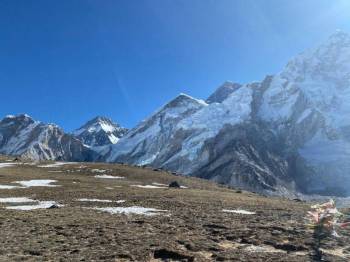
Stunning views - Mount Everest (8848m/29021ft), Nuptse (7,879m), Lhotse (8,501m), Lhotse Middle Peak (8,410m), Lhotse Shar (8,383m).Makalu (8475m), Baruntse (7,162m) and Ama Dablam (6,812m)
Kalapatthar Excursion (5,545m/18187ft)
Everest Base Camp (5,364m)
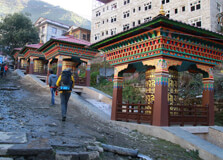
Namche Bazaar - famous Sherpa town
Ancient monastery in Tengboche
Wildlife like musk deer, colorful pheasants, snow leopard, and Himalayan tahr
Explore the culture and lifestyles of the local Sherpa people
Khumjung monastery - said to have housed yeti scalp

15 Nights/ 16 Days
Max People : 30
EVEREST REGION

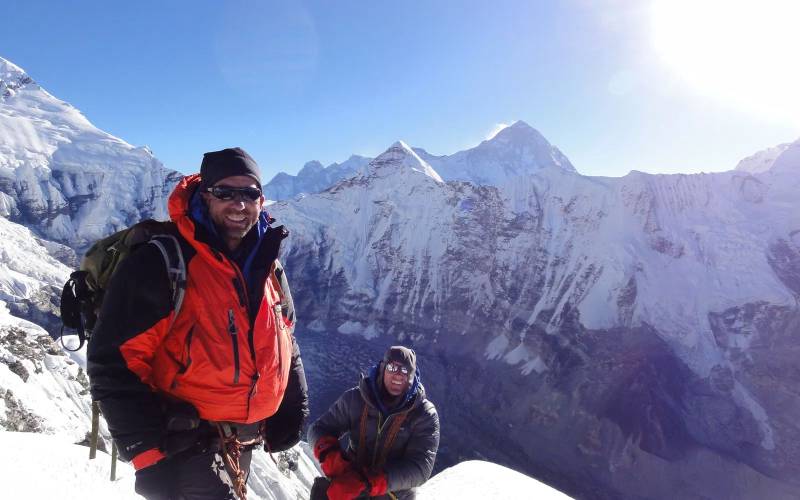
The Island Peak Climbing with Everest Base Camp Trek is a thrilling 16-day expedition that combines the world’s most famous trek with a genuine Himalayan mountaineering challenge. Standing at 6,189 meters, Island Peak offers the perfect introductory climb for fit trekkers who want to step beyond standard hiking. This route takes you through the heart of the Khumbu region, past bustling Sherpa villages and ancient monasteries, before reaching the foot of Mount Everest. After soaking in the views at Base Camp and Kala Patthar, you will transition from trekker to climber. Equipped with crampons, ropes, and ice axes, you will tackle a steep headwall and a narrow summit ridge to earn breathtaking 360-degree views of Everest, Lhotse, and Makalu.

Key Highlights

Receive hands-on climbing training from expert guides before summit day
Summit the 6,189-meter Island Peak with panoramic Himalayan views.
Trek to the iconic Everest Base Camp and Kala Patthar viewpoint
Experience a technical mountaineering challenge with fixed ropes and crampons
Watch a spectacular sunrise over Mount Everest from Kala Patthar
Immerse yourself in the rich Sherpa culture of the Khumbu region.
Best time to do Island Peak Climbing with Everest Base Camp Trek
The best time to do the Island Peak Climbing with Everest Base Camp Trek is during the spring and autumn seasons. Spring runs from March to May, offering stable weather and warmer temperatures. The clear morning skies give you perfect views of the surrounding peaks. Walking during these months makes the long trekking days and the high summit push feel much more comfortable.

Autumn, from September to November, is another excellent window for this 16-day climbing adventure. The monsoon rains clear up, leaving the air crisp and the mountain views incredibly sharp. The weather remains stable, which is crucial for a safe summit attempt. You should avoid the winter months due to extreme cold and heavy snow blocking the climbing routes.

What to expect in Island Peak Climbing with Everest Base Camp Trek
You can expect an exciting mix of classic trekking and genuine mountaineering on the Island Peak Climbing with Everest Base Camp Trek. The journey takes you through busy Sherpa villages and along glacial valleys to reach Everest Base Camp. As you move toward Island Peak, the trail becomes more remote. You will face a challenging headwall that requires fixed ropes and crampons to reach the top.

Because this is a climbing expedition, you should expect a very long and demanding summit day. You will start hiking around midnight and climb for up to 14 hours in freezing temperatures. Your guide will provide hands-on training in Chhukung to teach you the necessary rope skills. Reaching the 6,189-meter summit offers a breathtaking 360-degree panorama of Everest and Makalu that makes the effort worthwhile.

How difficult is Island Peak Climbing with Everest Base Camp Trek
The Island Peak Climbing with Everest Base Camp Trek is a moderately difficult journey suited for very fit adventurers. It is significantly harder than a standard Everest Base Camp trek because of the technical climbing sections. You do not need previous mountaineering experience, but you must have strong cardiovascular endurance. Prior high-altitude trekking experience above 4,000 meters is highly recommended to handle the thin air.

The main challenge of this itinerary is the summit day on Island Peak. You will climb steep ice walls using ascenders and cross a narrow, exposed ridge at 6,189 meters. The sub-zero temperatures and midnight start add a heavy mental challenge to the physical effort. With proper training, a steady pace, and an expert guide, determined trekkers can successfully conquer this iconic peak.

What to pack for Island Peak Climbing with Everest Base Camp Trek
When deciding what to pack for the Island Peak Climbing with Everest Base Camp Trek, you must focus on extreme cold weather gear and layering. Bring a moisture-wicking thermal base layer, a heavy down jacket, and a waterproof outer shell to handle sub-zero summit winds. Stiff, mountaineering boots compatible with crampons are absolutely essential. You will also need a high-quality sleeping bag rated for minus 15 degrees Celsius.

Along with your trekking clothing, your packing list must include specific technical climbing gear. You need a climbing harness, a helmet, an ice axe, and crampons. A headlamp with extra batteries is necessary for the dark summit push, while trekking poles will help your knees on the descent. Your guide will provide group ropes and carabiners, but personal gear ensures a safe and comfortable climb.

Permits required for Island Peak Climbing with Everest Base Camp Trek
Sagarmatha National Park Permit: Required to enter the Everest region and trek to base camp.
Khumbu Pasang Lhamu Rural Municipality Permit: A local permit that supports trail maintenance and local communities.
Island Peak Climbing Permit: Issued by the Nepal Mountaineering Association, this is mandatory for your summit attempt.
Note: Wilderway Trekking will arrange and process all these permits for you before your journey begins.

Why travel with Wilderway Trekking
Professional Climbing Guides: Our certified guides have extensive experience and proven summit records on Island Peak.
Hands-On Training: We provide thorough pre-climb training in Chhukung so you feel confident with ropes and crampons.
Smooth Logistics: We handle all permits, flights, and teahouse bookings for a stress-free expedition.
Safety Focused: Our itinerary includes proper acclimatization days and a buffer day for weather delays.
Transparent Pricing: We offer clear, all-inclusive costs with no hidden fees for group climbing gear.

Lukla, Namche Bazaar and Tengboche Monastery Tour Itinerary

Day 1
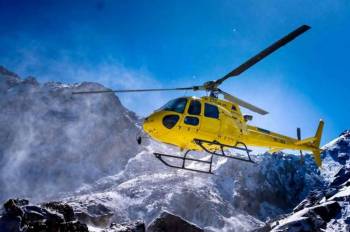
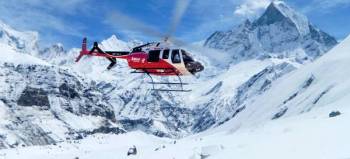
During peak trekking seasons (March, April, May, September, October, and November), flights from Tribhuvan International Airport (TIA) in Kathmandu to Lukla may be redirected to Manthali due to traffic congestion. To catch the early morning Lukla flight from Manthali, we'll pick you up from your hotel around 12:30 am and drive you for about 5 hours to Manthali Airport. The subsequent 20-minute flight from Manthali will take you to Lukla. If you want to avoid the Kathmandu-Manthali-Lukla route, you can book a helicopter from Kathmandu to Lukla. The cost is approximately 950 USD per person when the expenses are shared among five individuals. In December, January, February, June, July, or August, you will directly fly from Kathmandu to Lukla. After breakfast, we'll take you to Tribhuvan International Airport (TIA) for an exhilarating 40-minute flight to Tenzing Hillary Airport in Lukla, offering breathtaking views of the Himalayan ranges. After your exciting and scenic flight, you will land at the Tenzing Hillary Airport at Lukla. The trek begins from Lukla, passing through Chaurikharka Village and then descending to Dudh Koshi Ghat (2,530m/8,300ft) to reach Phakding. Today's trek will be short and enjoyable as you will also be acclimatizing. In your spare time, you are free to visit the local monasteries (including Rimishung Monastery) and brace yourself for the long trek the next day.
Day 2
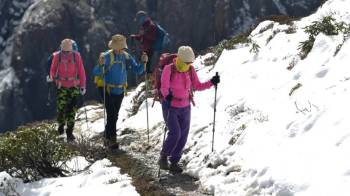
We continue along the northern bank of the Dudh Koshi River, enjoying the majestic views all around. We will be crossing several suspension bridges over the Dudh Koshi River, including the famous Hillary Suspension Bridge. Again, following the trail, we will arrive at the Sagarmatha National Park Check Post, where we will have our permits registered. Inside the Sagarmatha National Park, we climb through dense forests and continue on a path that provides us with the first views of Mount. Everest. Trekking further, we will finally arrive at Namche Bazaar - the gateway to Everest.
Day 3
We will be acclimatizing today. You are free to explore Namche Bazaar, throbbing with numerous Wi-Fi-linked cafes and restaurants, souvenir and gear shops, etc. Additionally, you can hike to Sagarmatha National Park Visitor Center and even visit Khumjung. We will not miss visiting Hillary School and old monasteries on our way to Khumjung. Then we will hike up to Khunde. There is a Sherpa settlement an hour away from Namche Bazaar. If you want to know about Sherpa culture, lifestyle, and traditions, you must visit this settlement. We will also take you to Syangboche Airport - one of the world's highest airports. Unfortunately, this airport is not currently in use. If you want to see mt. Everest even more, you can hike to Everest View Hotel. Before it starts to get dark, we will head back to Namche Bazaar, visiting yak farms on the way.
Day 4
After our early morning breakfast, we will begin our trek to Tengboche, known for panoramic views of Everest, Nuptse, Lhotse, Ama Dablam, and Thamserku mountains. Tenzing Norgay, one of the first men to reach the summit of Mount Everest, was born in the area of the village of Thani and was once sent to Tengboche Monastery to be a monk. On the way, you will enjoy the stunning views of Mt. Everest, Nuptse, Lhotse, and Island Peak. The trail leads us up and down as it becomes challenging, but you will be rewarded with great views of the Himalayas. You can also spot wildlife on the way, such as musk deer, pheasant, and Himalayan tahr. We will further trek down, and cross the Dudh Koshi River, past the dense alpine forests to reach a small settlement called Phunki Tenga. After trekking some more, we will eventually reach Tengboche, home to the biggest Buddhist monastery in the Khumbu Region -Tengboche Monastery. This monastery was built in 1923, but the 1934 earthquake destroyed it, a fire during the early 1990s also gutted it. After the fire destroyed it, the monastery was rebuilt with the help of the Sir Edmund Hillary Fund.
Day 5
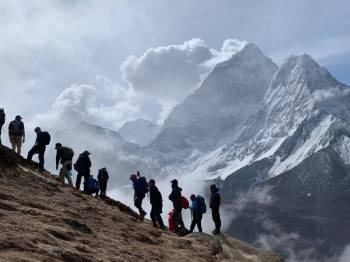
We continue our trek uphill to Pangboche, past many chortens, mani walls, and small villages. You will be able to see spectacular views of the Mt. Island peak. Following the Lobuche River, we will be entering the Imja Valley and trek on a steeply ascending trail to Dingboche. From Dingboche, we can see Island peak (6,812m) and Mt. Lhotse (8,516m). Dingboche sits surrounded by stone walls to protect crops from cold winds and animals. While plowing, these stones are removed and piled up, creating kilometers-long stone walls.
Day 6
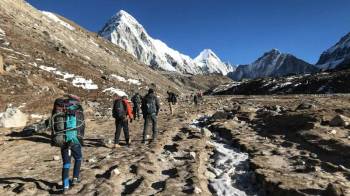
The trek to Lobuche will be an interesting one as you will be able to see the stunning mountain views nearly throughout the path. Following the wide valley, the trail proceeds to a short uphill near a ridge of a top shrine. Then you will cross a glacial moraine and a small collection of lodges. As the trek elevates, you will get better views of more snow peaks throughout your way to Thukla. On the way, there are memorial statues of the climbers who could not succeed in this harsh region. The hike to Lobuche is enjoyable.
Day 7
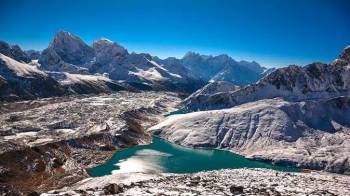
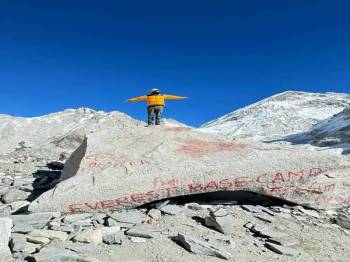
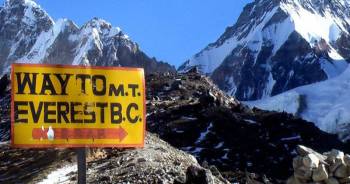
It will be a long-awaited and rewarding day. From Lobuche, we follow the glacial moraine up as the views keep getting better. Eventually, we reach the lodges of Gorak Shep, where we will be spending the night. However, as soon as we reach Gorak Shep, we will have lunch, leave our belongings here, and proceed to Everest Base Camp (5,364m). After reaching Everest Base Camp, you will probably realize that this is the nearest you will ever be to the world's highest mountain - Everest. You will be savoring the views from the base camp, including the incredible Khumbu Icefall, and may even feel emotional to achieve this feat you had planned long ago. After spending some quality time at EBC, you will head back to Gorak Shep to spend the rest of the day.
Day 8
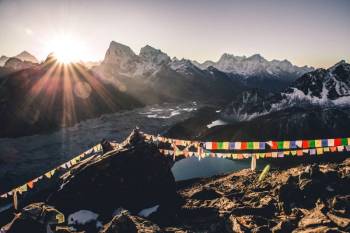
You will be hiking to Kala Patthar (5550m / 18,208 ft), on rocky trails, at dawn to view the sunrise on Mt. Everest and other peaks. Kala Patthar is a famous viewpoint that provides splendid panoramic views of Mt. Everest and other peaks. You will find prayer flags hung along the way. After savoring the panoramic views from Kala Patthar, you will return to Gorakshep for breakfast. After breakfast, our descent begins. It will be a long trek, at first, from Gorakshep, we reach Lobuche. From Lobuche, we continue to trek east, across Kongma La Pass (4,910m), and finally arrive at Chhukung.
Day 9
You will spend this day acclimatizing. Your Sherpa climbing guide will train you on peak climbing. You will learn the best ways to use your climbing gears - ropes and knots, ice axes, climbing boots, crampons, harness, etc. Island Peak climbing does not require prior training experiences. Although without a doubt, such training experiences will boost climbers' confidence, sharpen climbing skills, and increases the chances of scaling the summit.
Day 10
Chhukung Village (4,730m/15,518 ft) lies on a left fork of the Imja Khola in the Solukhumbu District of Sagarmatha Zone. This area used to be a yak pasture with no permanent habitation. The ascent of Island Peak is challenging and will require crampons and an ice ax to navigate the glaciers and ice headwalls. You also need to have a good level of fitness. We ascend southwards along the moraine from the Lhotse glacier to the east. A short hike takes you by the side of rock blocks, and after a 40-minute climb, you reach Island Peak Base Camp. After setting up the tents, you will get short training on peak climbing techniques and using climbing gear such as ice axes, climbing boots and crampons, harnesses, and ropes.
Day 11
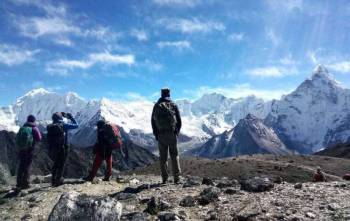
Imja Tse, popularly known as Island Peak, lies in Sagarmatha National Park. The peak was named Island Peak in 1953 by members of the British Mount Everest expedition because it looks like an island protruding from the sea of ice when viewed from Dingboche. The peak was renamed in 1983 to Imja Tse, but the older name Island Peak is still in use. This peak extends the ridge coming down off the south end of Lhotse Shar. We start early morning to reach the summit before noon so that you can avoid afternoon winds. You will follow our experienced Sherpa guides and ascend the rocky ridge before reaching a glacier. Then using ropes, we continue up the glacier to the south ridge and follow this ridge to the summit. From the top, you can see outstanding views of Lhotse (27,890 feet), Makalu (27,805 feet), Island peak (22,493 feet), and Baruntse (25,328 feet). After enjoying the views from the top, we descend to Island Base Camp and further down to Chhukung.
Day 12
We have allotted an extra day allowance, just in case we don't have favorable weather on our summit day. If the weather was not suitable yesterday, we will summit Island Peak today. Otherwise, we will use this day to relax and enjoy being surrounded by the Himalayas.
Day 13
We descend to Tengboche Village, located within the Sagarmatha National Park (a UNESCO World Heritage Site), where the famous Tengboche monastery, the biggest monastery in the Everest region, lies. From the monastery, you will be able to see panoramic views of the Himalayan peaks, including Mt. Everest, Nuptse, Lhotse, Ama Dablam, and Thamserku.
Day 14
The trail to Namche Bazaar, from Tengboche, takes us through forests teeming with wildlife like pheasants, musk deer, mountain goats, or even snow leopards. We will be climbing on the steep slopes and winding through several bends passing numerous prayer flags and chortens. While heading back, you can click pictures and enjoy the views of the tip of Everest and the backside of Lhotse. After finally arriving at Namche Bazaar, we will head to our lodges and rest.
Day 15
Our last day on the trekking trails will be rewarding as we return to Dudh Koshi Valley. The route is generally gentle back uphill to Lukla from the Kusum stream. Before rushing to Lukla, the trail heads steeply up to the west. After the first climb, the path reaches a small village and then leads down to the main trail, joining at the sidestream before Toktok. From Toktok, the mountain views will be entirely different and unique. Eventually, we reach the large town of Lukla, from where we will take a flight back to Kathmandu the next day.
Day 16
After your adventure, it is time to return. From Lukla, you will either fly to Manthali or Kathmandu, depending on the ongoing trekking season. If your trek is in March, April, May, September, October, or November, you'll likely fly to Manthali, followed by a subsequent drive to Kathmandu. In December, January, February, June, July, or August, you will fly directly from Lukla to Kathmandu. If you choose, you can bypass the Lukla-Manthali-Kathmandu route. For this, you can collaborate with four other individuals to book a helicopter, incurring an additional charge of approximately 950 USD per person. If everything goes according to the schedule, you will return to Kathmandu on this day. We hope your journey back to Kathmandu will be relaxing, with no more trails to trek and no peaks to climb. You will probably be looking back at your journey, recreating the unforgettable memories you formed. Your trek package ends at Kathmandu.

More Details about Lukla, Namche Bazaar and Tengboche Monastery Tour

Inclusions

  • Hotel
  • Domestic flights (Kathmandu – Lukla – Kathmandu) cost and airport taxes
  • All standard meals (16 Lunches, 15 Dinners, and 16 Breakfasts) during the trek/climb.
  • Total 15 nights. Five nights twin sharing room with private attached bathroom at Lukla, Namche (3N), and Phakding. Eight nights twin sharing accommodation at Tengboche (2N), Dingboche, Chhukung (3N), Lobuche, and Gorakshep. 2 nights accommodation at camp/tent in the Island Peak Base Camp (twin sharing)
  • Group gears and supplies (ropes, ice screws, snow bars)
  • All camping equipment (kitchen tent, dining tent, toilet tent, table, chair, and kitchen utensils)
  • Government Licensed Wilder Way Trekking experienced trekking/climbing leader, cook, and porters to help trekkers luggage. (2 trekkers will share a porter) Max load 18 kg per porter.
  • Guide and porters' costs, their meals, insurance, salary, lodging, transportation, flight, and other necessary equipment.
  • Permits for Island Peak (6189m)
  • Sagarmatha National Park entry permit fee & Khumbu Pashang Lhamu Rural Municipality fees
  • Garbage deposit
  • Medical kits
  • The arrangement of sleeping bags and down jackets, if needed
  • All government and local taxes
  • Rescue operation arrangements in case of complicated health conditions (funded by travel insurance).
  • Snacks (cookies) and seasonal fresh fruits every day
  • Souvenir - a company's T-shirt & a cap
  • Wilderway Trekking trek/climb appreciation certificate after the successful trek
  • Farewell dinner in Kathmandu at the end of the trek.

Exclusions

  • International flight airfare
  • Nepal visa fees. 50 USD for 30 days.
  • Excess baggage charges (limit is 9kg per person)
  • All accommodation and meals in Kathmandu, before and after the journey
  • Extra night accommodation in Kathmandu due to early arrival, late departure, or early return from the trek.
  • Personal expenses (shopping, snacks, boil bottle water, hot (tea/coffee) and cold drinks, hot shower, alcohol, Wi-Fi, telephone call, battery re-charge fee, extra porters, etc
  • Personal clothing and climbing gear
  • Travel insurance which has to cover emergency high-altitude heli- rescue and evacuation compulsory
  • Tips for guide and porters
  • Additional costs due to delays or consequences of delays caused by circumstances beyond our control, including landslides, weather conditions, itinerary modification due to safety concerns, illness, changes in government policies, strikes, etc
  • All the costs and expenses not listed in "What is included in the package?" will be counted as excludes

Payments Terms

  • * 20% Advance Percentage of total booking amount

Cancellation & Refund Policy

  • * Upon cancellation, refund will be made after deducting the Retention Amount.

Packages by Theme

Trekking Tours
Fill Enquiry Form Below
+91

Similar Tour Packages for Lukla

Explore Tour Packages by Destination


Close

Raise your Query

Hi! Simply click below and type your query.

Our experts will reply you very soon.

WhatsApp Us